


How EMI Operators Can Launch in Europe in 2026 Using Licensed Financial Infrastructure
How EMI Operators Can Launch in Europe in 2026 Using Licensed Financial Infrastructure
Getting a full Electronic Money Institution license is no longer the only door into the European fintech market. A growing number of operators are launching digital banking products by partnering with licensed institutions through Banking-as-a-Service infrastructure — cutting time-to-market while keeping regulated activity exactly where it belongs.
In this article
Why traditional EMI licensing isn't always the best starting point
Building an independent EMI from scratch means significant investment: experienced compliance teams, regulatory approval, capital requirements, internal governance, risk management, safeguarding arrangements, and ongoing supervision. Depending on the jurisdiction, authorization alone can take many months before a single customer is onboarded.
For startups and technology companies, that timeline slows innovation and drives up costs long before any revenue arrives. It's why a growing share of operators now choose to launch on top of licensed financial infrastructure that already exists, rather than building a regulated institution of their own from day one.
The Banking-as-a-Service model
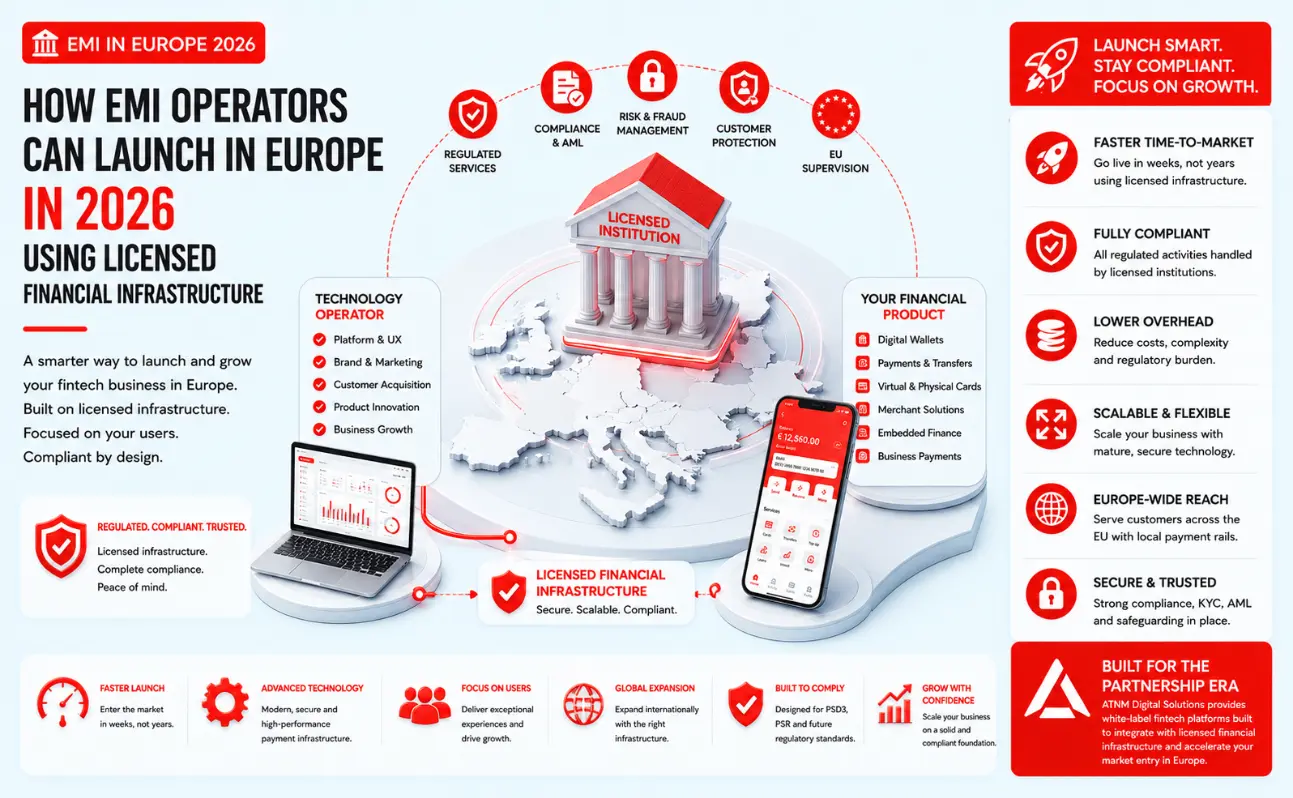
Modern BaaS lets a technology company build the customer-facing product while a licensed financial institution delivers the regulated payment services behind it. Each side sticks to what it does best.
The technology operator handles
Platform development, customer experience, branding, user acquisition, software innovation, and business growth.
The licensed institution handles
The regulated financial activities that require formal authorization, along with the compliance obligations attached to them.
That separation lets both parties focus on their own expertise while the platform as a whole stays compliant with European financial regulation.
What services can be offered
Depending on the licensed partner's capabilities, operators can give customers access to a genuinely broad set of financial products — without ever holding the underlying license themselves.
The exact product lineup ultimately depends on the licensed institution behind the platform and the commercial terms agreed between both parties.
Customer verification and regulatory compliance
Compliance sits at the core of any fintech platform. Within a partnership-based model, customer onboarding follows the framework set by the licensed institution delivering the regulated services — typically covering Know Your Customer (KYC), Know Your Business (KYB), AML screening, sanctions screening, transaction monitoring, and ongoing compliance controls.
By relying on licensed infrastructure, operators can offer modern financial products to their users while keeping every regulated activity inside an appropriate, supervised compliance framework.
Faster time-to-market
Launching through licensed financial infrastructure cuts the time needed to enter the market dramatically. Instead of spending years building regulatory capability from the ground up, companies can focus on delivering value to customers right away.
PSD3 and where European payments are heading
Europe's payment landscape keeps evolving through PSD3 and the new Payment Services Regulation. The goal is stronger consumer protection and fraud prevention alongside a more harmonized payment framework across all EU Member States — while still clearly separating regulated payment activity from technology services and keeping licensed institutions under strict supervision.
That environment is exactly what continues to make collaboration between licensed institutions and technology providers such a productive model for innovation across Europe. Success today depends less on who holds a license and more on user experience, modern technology, rapid product development, and secure, scalable infrastructure — which is why more operators are choosing to build outstanding products on top of existing regulated rails instead of becoming financial institutions themselves.
Built for the partnership era
ATNM Digital Solutions develops enterprise-grade white-label fintech platforms designed to integrate with licensed Banking-as-a-Service ecosystems, so businesses can deploy a fully branded financial product with modern payment functionality on top of regulated infrastructure. Whether it's a digital wallet, an embedded finance solution, a payment platform, or a white-label neobank, our technology is built to shorten development time and accelerate market entry — with regulated activity handled exactly where it should be.